Tokyo City officially began on May 1, 1889, when 15 wards were organized into a municipality. The date carries a 32/5 full date total, a 1 day, 26/8 year energy, Earth Ox Eastern sign, and Taurus Western influence. Tokyo's older history reaches back to 1457, when Ōta Dōkan built Edo Castle, and 1603, when Tokugawa Ieyasu established his shogunate in Edo, making it Japan's political center under military rule.
The strongest discovery appears in Tokyo's earlier transformation on September 3, 1868, when an imperial decree renamed Edo to Tokyo, meaning "Eastern Capital." Issued on July 17 under Japan's traditional calendar, the decree carries a 35/8 full date total and 23/5 year energy when calculated using its Gregorian date. Tokyo's municipal foundation in 1889 reverses that relationship with a 32/5 full date total and 26/8 year energy. The two defining dates exchange 5 and 8, connecting Tokyo's emergence as Japan's eastern capital with its later establishment as an organized municipality.
Tokyo's Eastern timing reveals another pattern. In the Ox year of 1925, construction began on the city's first subway, while another Ox year in 2021 brought the postponed Olympic and Paralympic Games. The friendly Rooster year of 1993 saw the opening of Rainbow Bridge, while friendly Snake years brought Tokyo's selection as Olympic host in 2013 and the World Athletics Championships in 2025. Direct enemy Goat years produced significant institutional changes. In 1943, Tokyo City was abolished and merged with Tokyo Prefecture to establish Tokyo Metropolis. In 1991, the new metropolitan government headquarters opened in Shinjuku, while 2015 brought the cancellation of the original National Stadium design during Olympic preparations.
CUE: Tokyo's defining connection is the reversal of 5 and 8 between its 1868 renaming and 1889 municipal foundation. Its Ox years highlight infrastructure and global visibility, while friendly Snake and Rooster years bring major international recognition and urban development. Repeated Goat years reveal administrative transformation, relocation, and difficult redesign. Together, these patterns connect Tokyo's numerical identity with the recurring reinvention of its government, infrastructure, and international presence.
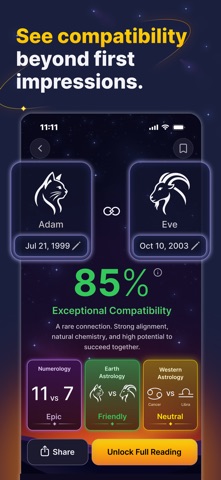
Compatibility: Rat carries the strongest relationship with Tokyo as the Ox soulmate. Snake and Rooster are friendly signs that may align well with its energy, while fellow Ox energy can amplify the connection. Goat is the direct enemy of Ox and may experience greater friction with Tokyo's municipal imprint.